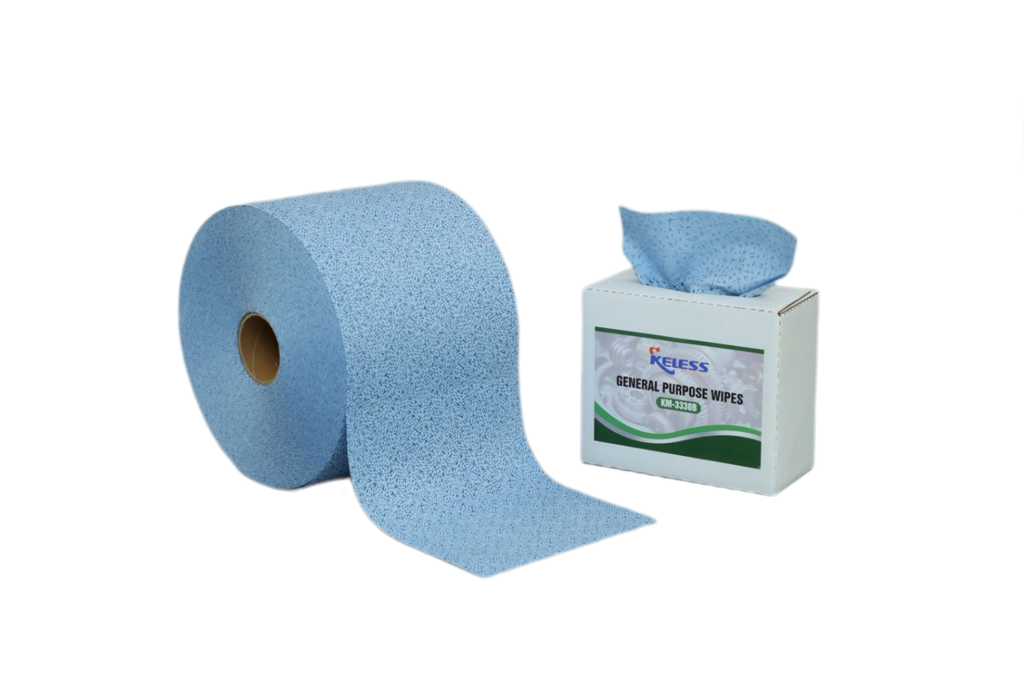



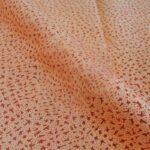
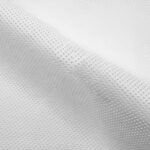
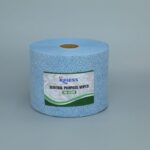
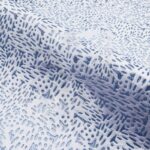
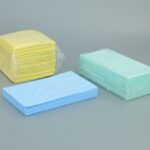
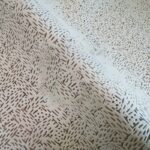
A workshop manager at a mid-size machine shop once asked why a “heavy-duty” wipe fell apart the moment it was soaked in solvent. The problem was not the wipe‘s weight; it was the fiber structure. Meltblown polypropylene, cellulose/polyester spunlace, and viscose blends behave differently in the same cleaning task, and that difference matters in cost per wiped surface. Wipes are used dozens of times per shift, in different zones of the factory, and by different operators, so the purchasing decision needs to start from the actual cleaning tasks, not from a catalog photo.
What Determines Wipe Performance
A wipe is a nonwoven fabric formed from fibers bonded together by heat (meltblown), water jets (spunlace), or chemical binders. The fiber chemistry and bonding method determine absorbency, wet strength, and lint behavior. Three variables define performance in most industrial settings:
- Absorbency measures the grams of liquid retained per gram of wipe. Meltblown PP can hold several times its weight in oil, while cellulose-based blends absorb water and water-soluble coolants more quickly.
- Wet strength determines whether the wipe survives scrubbing after saturation. For degreasing and cleanup, low wet strength means more wipes consumed per task.
- Lint generation measures the fiber released onto the surface. In a paint shop or electronics assembly area, lint becomes a defect risk.
A comparison of the two most common substrates explains why they are not interchangeable:
| Property | Meltblown Polypropylene | Cellulose/Polyester Spunlace |
|---|---|---|
| Oil absorption | High | Medium |
| Water absorption | Low | High |
| Wet strength | Good | High |
| Lint generation | Medium to high | Lower |
| Solvent compatibility | Excellent | Good |
| Typical applications | Degreasing, oil spills, heavy maintenance | General cleaning, food service, precision wiping |
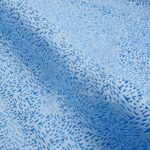
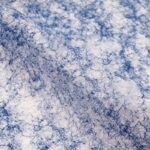
Meltblown PP wipes are the default for oil-laden environments. The micro-fibers create a large surface area that captures oil while the polypropylene structure resists solvent breakdown. A cellulose/polyester spunlace wipe, on the other hand, offers higher liquid retention for water-based fluids, better wet strength, and lower lint, which makes it suitable for general cleaning and more sensitive surfaces.
https://www.youtube.com/@SuzhouKelessPurificationMateri
Matching Wipes to Your Application
Heavy-Duty Degreasing and Oil Spill Cleanup
In machine shops, printing facilities, and automotive maintenance bays, the dominant soil is oil and grease. The wipe must lift oil from a surface and hold it in the fiber structure without losing shape. Meltblown PP wipes are engineered for this: they absorb oil quickly, resist solvents such as degreasers and thinners, and remain intact when scrubbed.
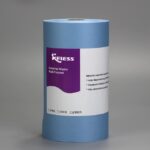
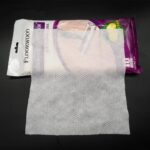
A pop-up box format is common because it allows the operator to pull one wipe at a time, preventing the cross-contamination that occurs when wipes are stacked loose on a bench. For solvent-heavy applications, choose a wipe with a proven solvent-resistant formulation to avoid breakage and fiber transfer onto expensive parts.
Medium-Duty General Maintenance
General maintenance covers a broad range of tasks: wiping machine housings, cleaning workbenches, absorbing coolant spills, and dusting storage racks. For these tasks, a cellulose/polyester spunlace wipe provides the best balance of absorbency, durability, and cost. The blend gives the cloth enough wet strength to be reused for several wipes before disposal, and the lower lint count helps keep the workshop free of fiber debris.
A 1/4-fold format or a perforated roll gives the operator flexible access. In plants where several workers share the same station, a jumbo roll mounted on a wall dispenser reduces waste because only the needed length is torn off. This format also minimizes the risk of picking up floor contamination, which matters when the wipe is used near food processing or clean assembly lines.
Light-Duty and Lint-Sensitive Areas
Light-duty tasks—wiping control panels, cleaning painted surfaces, and preparing components before assembly—require a material that does not scratch or leave residue. Low-linting wipes with a soft, smooth surface are the safest choice. In most plants, a light-duty pop-up box wiper with a moderate basis weight (around 45 to 60 gsm) is sufficient and more economical than a heavy-duty product.
For precision areas, check that the wipe is low-linting and free of binders that could smear. This matters most in electronics assembly, optical equipment maintenance, and surface preparation for painting. A dedicated light-duty wiper for these zones prevents cross-contamination between heavy oil areas and sensitive work areas, which is a common cause of defect rates in manufacturing. Automotive paint preparation is a classic example: a lint-free wipe is mandatory because a single loose fiber can cause a surface defect after the top coat is applied.
Quality Control: What Separates a Good Supplier from a Great One
Spec sheets are easy to print. Consistent quality across every batch is much harder to deliver. This is where the gap between suppliers becomes visible.
Cleanroom Production Standards
For high-end nonwoven wipes—especially those used in medical and electronic applications—we strictly use Class 100 cleanrooms. All workers must wear full cleanroom suits, masks, and gloves. No exposed hair is allowed. To prevent cross-contamination and monitor quality, we place adhesive dust mats underneath the machines. Because the fabric rotates on the machines during production, there is a risk of linting. We continuously measure the linting rate using these mats to ensure it stays within strict limits.
Double Inspection: Automated Equipment + Human Eyes
Every batch of our disposable wiping cloths goes through a strict double inspection process:
- Automated Equipment Inspection: High-precision machines scan the fabric for inconsistencies, holes, or abnormal thickness.
- Manual Human Inspection: Our experienced quality control staff visually inspect the products again, feeling the texture and checking the edges.
If a batch fails either test, it does not leave the factory. We would rather delay an order than ship a defective product to our clients.
Why Japanese Clients Are Our Best Quality Reference
In the manufacturing world, Japanese companies are known globally for having the strictest quality standards. They do not tolerate defects, and they demand perfection. We are proud to serve many Japanese clients. This is a testament to our production capabilities. When European and American clients visit our factory, they often see our Japanese client orders in production. This gives them immediate peace of mind. They know that if our products meet Japanese standards, they do not need to spend extra time and money worrying about quality control.
Procurement Considerations
Total Cost per Wipe, Not Cost per Box
The purchase price per box tells you very little about your real cost. What matters is the number of wipes consumed per cleaning task. A wipe that disintegrates after one pass forces the operator to pull two or three from the box. A well-matched wipe, even at a slightly higher unit price, reduces total consumption and labor time.
Track the number of wipes used per shift and compare it across products. When you calculate cost per cleaned square meter, the difference between a meltblown PP wipe and a lower-grade paper towel becomes visible immediately. For example, if a task normally takes four paper towels but only two meltblown PP wipes, the higher unit cost per wipe is offset by the halved consumption and the reduced disposal volume.
Supplier Qualification
Consistency matters more than the headline specification. Ask a supplier for a technical data sheet showing basis weight, absorbency, and lint results, and request samples from the same production lot. For export buyers, check that the manufacturing facility follows the same quality control standard across batches.
The supplier‘s history with OEM/ODM projects also matters. If you need customized sizes, packaging, or embossed surfaces, confirm the production capacity and the minimum order quantity before committing. A supplier with in-house nonwoven production and secondary processing capabilities can adapt the wipe format without compromising the fiber specification.
The most common procurement mistake is specifying only the material family without the basis weight. Two wipes can both be labeled “meltblown PP” but differ in gram weight from 45 gsm to 100 gsm, which changes absorbency and cost significantly. Always request the exact basis weight in gsm and the wipe dimensions, because these two numbers determine the price per piece and the performance in the field.
Sample Testing: Try Before You Commit
We understand that sourcing from a new supplier involves risk. You need to test the product before placing a bulk order. Our sample policy is designed to make this easy for you:
- Small sample packs: Generally provided for free so you can test the quality.
- Large samples / full boxes: We charge a small cost fee to cover the material and shipping expenses.
- Custom testing: We do our best to accommodate any specific testing requirements you have.
We want you to test our products thoroughly. Good suppliers are not afraid of sample tests.
Professional Team & 24-Hour Response
Who you work with matters as much as the product itself. High employee turnover is a red flag—it means you have to explain your needs to a new sales rep every few months.
Our sales team consists of senior professionals who have worked in the nonwoven industry for over 15 years. This low turnover rate reflects our stability and industry leadership. When you work with us, you have a dedicated, experienced team that understands your market and your technical requirements.
Furthermore, our communication promise is simple: we respond within 24 hours. If you have any questions, concerns, or issues, you can contact us at any time.
A Practical Buying Recommendation
For a typical industrial facility, start with two products: a meltblown PP wipe for oil and solvent cleanup, and a cellulose/polyester spunlace wipe for general absorbency tasks. Keep a low-linting option for precision areas. This three-tier approach covers about 90% of wiping needs without inventory bloat.
Start with a simple trial: sample a meltblown PP wipe and a cellulose/polyester wipe, run them in the same tasks for a week, and measure consumption. The result will give you a data-driven answer that no brochure can match.
Conclusion
Industrial cleaning wipes are not a commodity. The difference between a meltblown PP wipe and a cellulose/polyester spunlace wipe is not cosmetic; it changes the number of wipes consumed, the cleanliness of the finished surface, and the total cost of maintenance. Match the material to the soil, verify the specifications with samples, and buy from a supplier that can support OEM dimensions and packaging.
At Keless Material, with 17 years of experience, a Class 100 cleanroom, and a commitment to quality, we are ready to support your business.