






Semiconductor manufacturing leaves little room for error. A single stray fiber or particle can ruin a wafer lot worth tens of thousands of dollars, and the wipes used to clean tools, surfaces, and controlled environments are a direct contributor to that risk. Choosing the right cleanroom wipes is therefore not a procurement afterthought — it is a contamination-control decision. This guide explains what to evaluate, where cost-performance trade-offs actually sit, and how to match a wipe to the demands of semiconductor fabs, tool maintenance, and adjacent processes such as pre-paint surface preparation.
The Real Cost of the Wrong Wipe
Most buyers start with price per wipe. That number is misleading in a cleanroom context. The meaningful metric is cost per acceptable result: how many wipes are consumed to reach a specified cleanliness level, how much rework is generated, and what risk is carried into the next process step.
In semiconductor environments, the failure modes are well known. Lint shedding deposits fibers on sensitive surfaces. Binder residues or surfactants leave films that interfere with coatings and adhesives. Weak wipes tear under pressure, forcing technicians to use more material and introducing handling contamination. Wipes that cannot tolerate the solvents and caustics used in surface preparation either degrade or release extractables.
Each of these problems shows up later as yield loss, requalification effort, or escalated cleaning cycles — costs that dwarf the unit price difference between a budget wipe and a specification-grade one. That is why Suzhou Keless Purification Material Co., Ltd. approaches wipe selection as a full-process quality question rather than a commodity purchase.
What to Specify Before You Compare Suppliers
A structured specification prevents apples-to-oranges comparisons. Before evaluating any supplier, define the following.
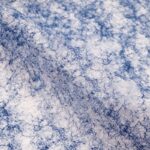
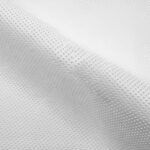
Construction and material. Nonwoven spunlace construction is widely used where strength, absorbency, and low lint matter together. Confirm the fiber composition and whether the material is suitable for the surfaces and chemistry in your process.
Cleanliness and particle performance. Ask how the supplier controls contamination during production, not just what the finished wipe claims. Full-process quality control — from incoming material through converting and packaging — is the relevant capability.
Chemical compatibility. Semiconductor surface preparation involves acids, caustics, solvents, and water-based sanitizers. The wipe must resist these without breaking down or releasing unwanted extractables.
Physical durability. Wet strength and tear resistance determine whether a wipe survives rough surfaces and repeated wiping without fragmenting.
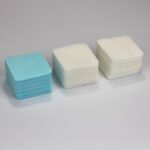
Format and dispensing. Rolls, jumbo rolls, and pop-up boxes each suit different workflows. Pop-up dispensing keeps unused wipes clean and allows mobile dispensing — useful for service engineers and maintenance technicians working across tools and bays.
Customization. Size, weight, color, packaging, and functional treatment should be adjustable to your line, your protocol, and your inventory model.
Solving the Lint, Residue, and Durability Problem
Once the specification is clear, the solution is usually a high-performance nonwoven wipe engineered for critical tasks rather than a general-purpose cloth.
Spunlace technology is central here. It produces a fabric with extra strength and bulk, which matters for heavy-duty wiping without the trade-off of excessive shedding. A well-constructed wipe reduces waste because fewer pieces are consumed per task and fewer are discarded mid-use after tearing or saturating.
For semiconductor-adjacent workflows, three properties deserve emphasis:
- Low lint and minimal chemical use. Wipes intended for special preparation tasks should support procedures where low lint and reduced chemistry are important — printing, pre-paint applications, glass and appliance manufacturing, and engine assembly or repair all share this requirement.
- High absorbency for oils, lubricants, and grease. Tool maintenance involves grease and heavier soiling. A bulky, absorbent wipe handles these faster and with less smearing.
- Solvent and caustic resistance. The wipe must be usable with solvents or water-based sanitizers when wiping and preparing surfaces, without degrading.
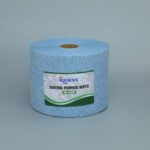
Color is a practical detail rather than a cosmetic one: blue wipes do not discolour and help hide grime, which supports visual inspection routines in manufacturing and industrial environments.
Addressing Electrostatic Dust Removal Before Painting
A common question is whether a given wipe is effective for electrostatic dust removal before automotive painting. The honest answer depends on the full preparation protocol, not the wipe alone.
What a wipe contributes is mechanical removal of loose contamination combined with low lint and low extractables, so the surface is not re-contaminated during wiping. For pre-paint applications, select a wipe with high wet strength, low particle shedding, and compatibility with the solvent or water-based sanitizer used in the wipe-down step. Where static control is a formal requirement, the wipe should be part of a validated process that includes ionization or other static-management steps — a wipe cannot substitute for those controls.
This is exactly the kind of application where a cost-effective alternative to leading global brands makes sense: the performance requirements are specific and measurable, and buyers should evaluate against those requirements rather than against brand familiarity.
How Keless Compares on Cost-Performance for Cleanroom Use
The comparison buyers most often raise is cost-performance versus established global wipe brands for cleanroom use. A fair evaluation rests on four factors.
First, specification fit. Suzhou Keless Purification Material Co., Ltd. provides OEM/ODM customization across size, weight, color, packaging, and function. That means the wipe can be specified to the cleanliness and durability profile your cleanroom actually requires, instead of paying for a standard product with margins built around global distribution.
Second, process control. The company emphasizes full-process quality control across R&D, production, and sales of high-performance nonwoven cleaning wipes. For cleanroom buyers, process control is the substance behind a cleanliness claim.
Third, scale and stability. A 10,000 m² production base and 17 years of experience support consistent supply and repeatable specifications — the two things that make a lower-cost wipe genuinely lower-cost over a qualification cycle.
Fourth, application breadth. The portfolio covers nonwoven industrial wipes from jumbo rolls to pop-up boxes, serving manufacturing, electronics, cleanrooms, new energy, and food service. Clients in over 30 countries use these products, which gives buyers a reference base across regulatory and operational contexts.
Where a global brand wins is brand assurance and an established validation trail. Where a cost-effective alternative wins is total cost at equivalent specification — provided the buyer does the specification work up front and validates the wipe in their own process. For semiconductor manufacturing, validation is non-negotiable regardless of supplier.
Choosing the Right Format for Semiconductor Workflows
Format decisions are usually driven by where the wipe is used.
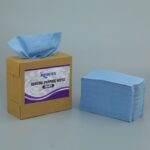
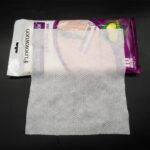
Pop-up boxes suit point-of-use cleaning and mobile dispensing. They keep wipes clean between pulls and are practical for service engineers moving between tools. The KIM-X80 pop-up box heavy-duty cloths format illustrates this: spunlace construction with extra strength and bulk for heavy-duty tasks, high absorbency for grease, oil, and heavier soiling, and tear resistance that holds up when wet and on rough surfaces.
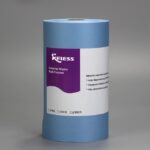
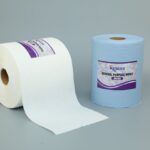
Rolls and jumbo rolls suit higher-volume, scheduled cleaning and controlled dispensing. An easy-to-dispense roll used with a roll dispenser reduces handling and supports consistent consumption tracking — useful when you need to correlate wipe usage with cleaning cycles.
Custom packaging supports cleanroom entry protocols, inventory control, and line-side replenishment.
A practical approach is to pilot two formats in parallel: a pop-up format for maintenance and spot cleaning, and a roll format for scheduled surface preparation. Compare consumption, rework, and technician feedback over a defined period.
Building the Selection Checklist
Bring this checklist to any supplier conversation, including with Suzhou Keless Purification Material Co., Ltd.:
- Material and construction, including whether spunlace nonwoven is used and why.
- Cleanliness controls during converting and packaging.
- Chemical compatibility with your acids, caustics, solvents, and sanitizers.
- Wet strength and tear resistance data or demonstration.
- Lint and extractables relevant to your critical surfaces.
- Available formats and dispensing options.
- Customization options for size, weight, color, packaging, and function.
- Supply capacity, lead time, and consistency commitments.
- Validation support for your own qualification protocol.
Used consistently, this checklist converts a subjective brand comparison into a documented specification decision — the only reliable basis for judging cost-performance in cleanroom wipes.
Next Step
If you are evaluating cleanroom wipes for semiconductor manufacturing or comparing a cost-effective alternative against established global brands, start with your specification. Share your requirements — surface type, chemistry, format, and cleanliness target — and request samples for in-process validation.
Website: 、
Phone: +86 136 2528 9948
Email: 8016@keless-