

The Challenge of Cleanliness in Precision Electronics Manufacturing
In the world of precision electronics manufacturing—where microchips, PCB assemblies, and semiconductor components are produced—the smallest contaminant can cause catastrophic failure. A single particle of dust, fiber, or residue landing on a wafer or circuit board during production can result in short circuits, reduced performance, or complete product rejection. For manufacturers operating at the cutting edge of technology, particularly those working in ISO Class 5 or higher cleanroom environments, the question is not whether contamination matters, but how to eliminate it reliably and consistently.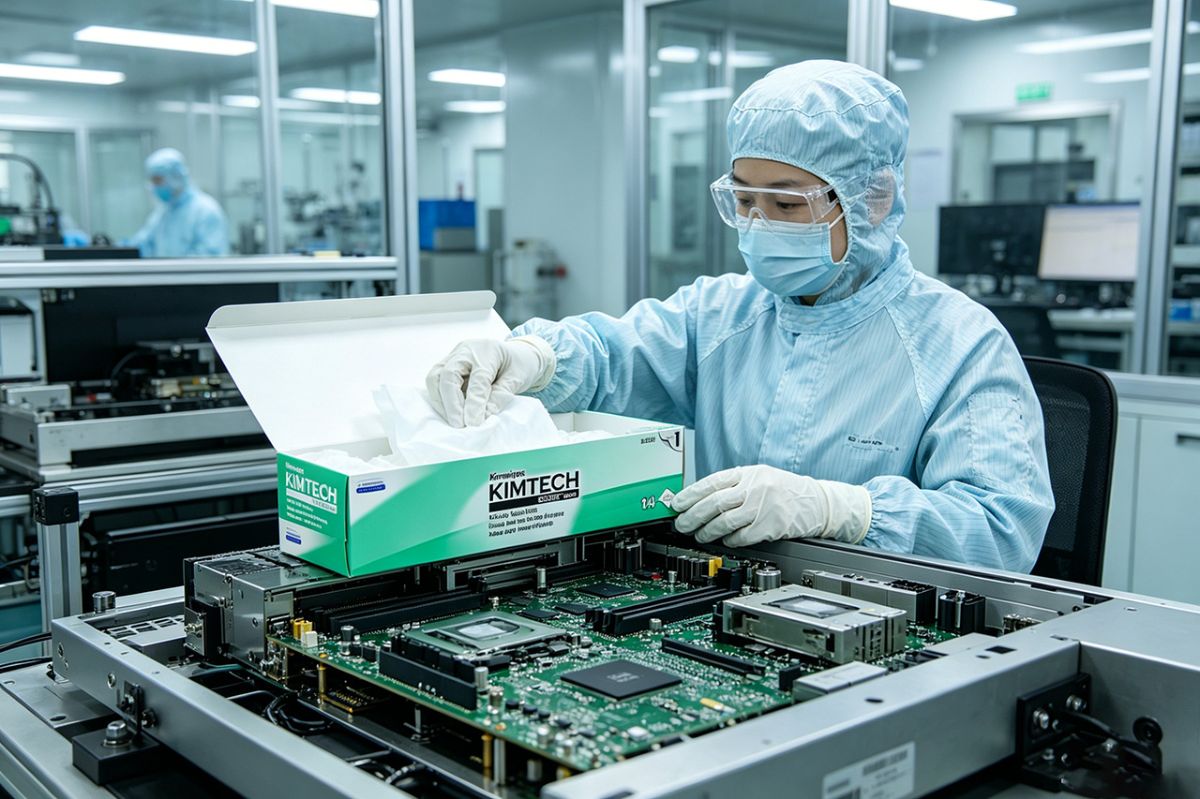
One of the most common tools in contamination control is the cleaning wipe. Yet, for many procurement and quality managers, a persistent concern remains:Can lint-free wipes truly achieve zero particle shedding? How is this verified? If your production line depends on absolute cleanliness, understanding the science behind lint-free wipes and their validation is essential.
The Real Problem: Particle Shedding in General Industrial Wipes
General industrial wipes are designed for tasks like absorbing oil, cleaning rough surfaces, or wiping down machinery. They are often made from recycled fibers, bonded materials, or blended fabrics that prioritize absorbency and cost over purity. Under microscopic examination, these wipes release hundreds or thousands of fibers and particles with each use. For a precision electronics environment, such shedding is unacceptable.
The core challenge is threefold:
- Fiber Release: Low-quality wipes release loose fibers that can adhere to surfaces, embed in solder joints, or float in the air, recontaminating the workspace.
- Residue Transfer: Chemical residues from manufacturing aids (binders, surfactants, lubricants) can transfer to sensitive components, leading to ionic contamination or corrosion over time.
- Inconsistent Quality: Without rigorous process control, the particle-shedding characteristics of a wipe can vary from batch to batch, making it impossible to guarantee consistent cleanroom performance.
For PCB and chip cleaning specifically, the requirements are far more stringent than for general industrial applications. A wipe used on a circuit board must not only remove flux residues and solder paste but also leave behind zero detectable particulates that could interfere with fine-pitch connections or micro-soldering.
The Solution: Engineered Lint-Free Cleanroom Wipes
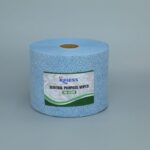
At Suzhou Keless Purification Material Co., Ltd. , we have dedicated over 17 years to solving this exact problem. Our Cleanroom Wipes are not general-purpose cloths repurposed for cleanroom use; they are precision-engineered products designed from the ground up for particle and contaminant removal in ISO Class 5 and above environments.
Our approach begins with material selection. We use high-performance nonwoven fabrics specifically chosen for their low particle generation and minimal fiber shedding. The manufacturing process—carried out in our 10,000 m² production base—includes dedicated cleanroom processing and packaging lines that prevent contamination from the moment the fabric is cut until it reaches your facility.
How We Verify Zero Particle Shedding: Full-Process Quality Control
The question “Can lint-free wipes truly achieve zero particle shedding?” is valid, and the answer lies in verifiable process control, not marketing claims. At Suzhou Keless Purification Material Co., Ltd. , we do not rely on a single end-of-line test. Instead, we implement full-process digital quality management that monitors every stage of production.
Key Verification Methods We Employ
1. Raw Material Validation
We source fabrics with documented low-linting properties and conduct incoming inspections using standardized particle-counting methods. Only materials that meet our internal thresholds for fiber release and particle generation proceed to production.
2. In-Process Particle Monitoring
During cutting, folding, and packaging, we use HEPA-filtered air systems and continuous particle monitoring in our cleanroom environment. This ensures that wipes are not inadvertently contaminated by airborne particulates during manufacturing.
3. Batch-to-Batch Consistency Testing
We test representative samples from each production batch using methods such as the liquid particle count (LPC) and fiber release test (commonly referenced standards include IEST-RP-CC004 and ASTM E2095). These tests measure the number and size of particles released when a wipe is flexed or rubbed against a surface. Our goal is to achieve results that meet the requirements of ISO Class 5 and above cleanroom protocols.
4. Digital Traceability
Every roll and box carries a traceable batch code. Our full-process digital quality management system records production parameters, test results, and packaging conditions for each batch. If a question arises, we can trace the product back to its raw material lot and production shift.
Does This Mean “Zero Particle Shedding” in Absolute Terms?
In the strictest scientific sense, no material is absolutely zero-shedding. However, in a practical cleanroom context, “zero particle shedding” means that the wipe does not release particulates at a level that exceeds the cleanroom’s contamination limit. For ISO Class 5 environments, this means particles of 0.5 microns and larger must be controlled to fewer than 3,520 particles per cubic meter of air. Our Cleanroom Wipes are designed and validated to operate within such thresholds, effectively achieving functional “zero shedding” for the intended application.
Key Requirements for PCB and Chip Cleaning Wipes
Compared to general industrial wipes, PCB and chip cleaning wipes must satisfy additional critical requirements:
1. High Purity and Low Residue
Our wipes are available in materials designed to minimize ionic and non-volatile residues. This is crucial for PCB cleaning, where residual ions can cause electrochemical migration and short circuits over time. We select fabrics that undergo additional purification steps to reduce extractable contaminants.
2. Effective Solvent Absorption
Precision electronics cleaning often involves solvents like isopropyl alcohol (IPA) or specialized flux removers. Our Cleanroom Wipes are engineered to absorb and retain these cleaning solutions effectively, allowing for thorough application and removal without leaving behind lint or fiber debris.
3. Controlled Manufacturing Environment
Unlike general wipes that may be produced in open factory settings, our wipes are manufactured and packaged under strict quality control to ensure cleanliness from start to finish. This includes using cleanroom-compatible packaging materials that do not introduce additional particle sources.
4. Flexible Customization
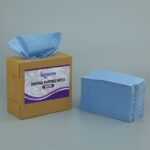
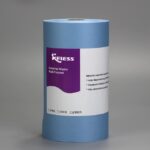
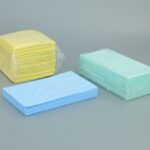
We recognize that different electronics manufacturers have unique requirements. As part of our flexible OEM/ODM customization service, we can adjust size, weight, color, packaging format (from jumbo rolls to pop-up boxes), and functional properties (such as electrostatic discharge (ESD) compatibility or enhanced absorbency). This ensures that the wipe you receive is tailored to your production environment, not a one-size-fits-all product.
Why We Are a Trusted Partner for Precision Electronics Manufacturers
With 17 years of experience in the nonwoven cleaning wipe industry, Suzhou Keless Purification Material Co., Ltd. has developed deep expertise in contamination control for sensitive manufacturing environments. Our 10,000 m² production base enables us to serve clients in over 30 countries, providing consistent quality at scale.
Our key differentiators include:
- Full-Process Quality Control: Digital management from raw material inspection to final packaging ensures traceability and repeatability.
- OEM/ODM Flexibility: We work closely with clients to develop custom solutions for specific cleanroom classes, solvent types, and application methods.
- Cost-Effective Alternative: We deliver performance comparable to leading global cleanroom wipe brands, while offering competitive pricing and direct manufacturer support.
- Certified Quality: Our modern facility operates with rigorous internal standards, and we can provide batch-specific test data upon request to support your cleanroom validation.
Make the Right Choice for Your Cleanroom
Particle shedding is not a mystery when you work with a manufacturer that prioritizes process control, material science, and verifiable quality. At Suzhou Keless Purification Material Co., Ltd. , we invite you to experience the difference that engineering, experience, and integrity make.
Whether you need wipes for semiconductor cleanrooms, PCB assembly lines, or new energy battery production, our team is ready to help you select or customize the right solution. Request a sample, request batch test data, or discuss your specific requirements with our technical team.