
Aerospace Cleaning Wipes: A Practical Selection Guide for Fiber, Solvent, and Custom Formats
Aerospace cleaning wipes are not a commodity purchase. A wipe that works well on a shop-floor bench may be the wrong choice for a bonded surface, a painted panel, or an avionics connector. The difference is rarely visible in the wipe itself. It shows up later as fiber release, non-volatile residue, solvent incompatibility, or inconsistent batch performance.
This guide takes a manufacturer’s view. Suzhou Keless Purification Material Co., Ltd. (KELESS) has 17 years of nonwoven production experience, four spunlace lines, and in-house control from raw material to finished product. That production depth matters because wipe performance is not only a fabric specification—it is a chain of decisions across fiber selection, bonding, embossing, cutting, solvent compatibility, and batch documentation.
Below is a practical framework for selecting aerospace cleaning wipes by contamination risk, fiber system, solvent exposure, format, and documentation requirements.
Start with the contamination path, not the catalog page
Aerospace cleaning problems usually fall into three contamination paths:
- Bonding and coating surfaces
Fibers, lint, and non-volatile residue can interfere with adhesive bonding, sealing, and coating adhesion. In these areas, low particle and fiber release matters more than absorbency speed. - Avionics, connectors, and sensitive assemblies
The risk is not only dust but also solvent residue, static, and physical damage. The wipe must be compatible with the cleaning chemistry and the contact surface. - General shop-floor and tooling cleaning
Here the priority shifts toward absorbency, strength, cost efficiency, and repeatable supply. A heavier pulp/polyester wipe may be more suitable than an ultra-low-lint critical wipe.
Once the contamination path is clear, fiber selection becomes a technical decision rather than a price comparison.
Fiber systems and where each one belongs
Different nonwoven fiber systems solve different problems. The table below shows how KELESS product lines can be matched to common aerospace cleaning tasks.
| Fiber / product system | Typical aerospace use | Key selection considerations |
|---|---|---|
| Pulp / PP pulp spunlace | Tooling, fixtures, general shop-floor cleaning, high-absorbency tasks | Good absorbency and cost efficiency; check lint and residue requirements before use on bonding surfaces |
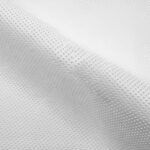
| Polyester spunlace | Critical cleaning, equipment surfaces, low-lint applications | Lower fiber release potential; specify weight, cut, and packaging according to the work area |
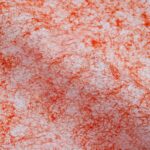
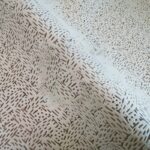
| Meltblown | Sealant removal, oil and grease removal, solvent wiping | Check solvent compatibility and wet strength; embossed or aperture patterns can improve soil removal |
| Tencel fiber | High-end finishing, sensitive surfaces, mild solvent cleaning | Soft hand and low surface damage risk; confirm compatibility with the specific solvent |
| Flame-retardant nonwoven | Specialized aerospace and industrial areas with flame-retardant requirements | Confirm the required flame-retardant standard and documentation before approval |
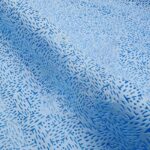
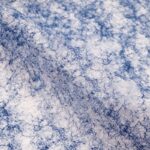
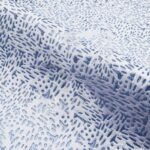
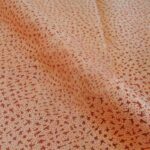
| Custom embossed / patterned nonwoven | Wipes requiring extra mechanical action or liquid distribution | Pattern, weight, and cut can be customized to the cleaning task |
The important point is not to ask “which wipe is the best?” but “which fiber system is appropriate for this contamination path, this solvent, and this format?”
Solvent compatibility is a material decision
Aerospace cleaning often involves solvents such as isopropyl alcohol, acetone, MEK, or customer-specified blends. Solvent compatibility cannot be assumed from a generic “solvent-resistant” label. It depends on fiber chemistry, binder system, weight, and exposure time.
For example:
- Cellulose-containing wipes can offer excellent absorbency, but wet strength and residue behavior must be verified for strong solvent use.
- Polyester and polypropylene systems may offer different resistance profiles depending on construction.
- Meltblown structures can be effective for grease and sealant removal, but the solvent exposure time and mechanical action must match the fabric design.
- Tencel and specialty fiber blends may be suitable for mild cleaning, but should be evaluated against the actual solvent.
KELESS supports presaturated solvent formulation development and can work with customers on wipe substrate selection, solvent loading, packaging format, and shelf-life considerations. This is useful for aerospace buyers who want a consistent pre-saturated wipe rather than mixing solvent at the point of use.
For critical applications, the buyer should request solvent compatibility data, residue information, and samples for on-site evaluation before approval.
Format, cutting, and dispensing affect efficiency and contamination control
Aerospace cleaning wipes are used in very different work areas. The format should follow the task:
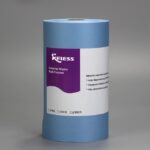
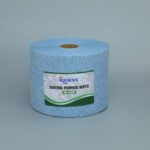
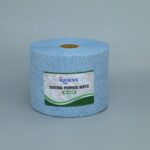
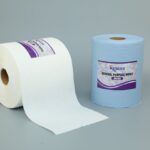
- Roll goods or large-format wipes for bench and tooling cleaning
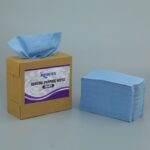
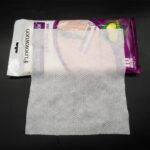
- Fold packs for controlled dispensing at critical workstations
- Presaturated wipes for repeatable solvent dosing and reduced open-solvent handling
- Custom-cut sizes for small connectors, optical surfaces, or specific fixtures
- Embossed or patterned wipes for sealant removal and mechanical cleaning
KELESS offers custom cutting and converting based on customer requirements. That includes size, fold, pack count, and packaging format. Because production is controlled from raw material to finished product across four spunlace lines, KELESS can support stable lead times and repeatable batch quality—two factors that matter when aerospace programs require consistent replenishment.
For buyers replacing an incumbent wipe, KELESS can develop formats that match commonly specified dimensions and dispensing styles, reducing the need to redesign workstations or re-train operators.
Documentation and certification: what to request before approval
Aerospace buyers rarely approve a wipe on absorbency alone. The documentation package matters.
Depending on the product line, KELESS can provide available third-party test reports such as SGS, MSDS/electronic reports, batch COAs, and product compliance information for customer evaluation. Specific certification requirements vary by application and product, so the correct approach is to define the requirement first and then match it to the available documentation.
A practical pre-approval document request should include:
- Fiber composition and construction
- Weight and dimensional tolerances
- Particle and fiber release data, where applicable
- Non-volatile residue information, where applicable
- Solvent compatibility statement
- Absorbency and wet strength data
- Packaging and cleanroom handling information
- Batch traceability and COA availability
- Third-party test reports such as SGS, and MSDS/electronic reports where applicable
KELESS also produces medical-industry nonwoven products, which brings a documentation-oriented production mindset to custom wipe programs. For aerospace customers, that means the conversation can move beyond “can you make this size?” to “can you supply this specification with consistent documentation?”
A buyer’s checklist before issuing a PO
Before placing an order for aerospace cleaning wipes, confirm the following:
- Contamination path
Bonding surface, avionics, painted surface, or general shop-floor cleaning? - Fiber system
Pulp/PP pulp, polyester, meltblown, Tencel, flame-retardant, or a custom blend? - Solvent exposure
Which solvent, concentration, and contact time? - Format
Roll, fold pack, presaturated, custom cut, or embossed? - Residue and lint requirements
What test method and acceptance level does your quality team require? - Documentation
COA, test report, certification, solvent compatibility statement, or batch traceability? - Supply stability
What lead time and replenishment schedule does the program require? - Customization
Size, fold, pack count, pattern, and packaging.
A wipe that passes the first three questions but fails documentation or supply stability is not a qualified aerospace wipe.
https://www.keless-material.com/products/finished-products/aerospace-and-defense-cleaning-wipes
FAQ
Q: Can KELESS customize aerospace cleaning wipes to a specific size and pack format?
A: Yes. Custom cutting, folding, pack count, embossing, and packaging can be developed according to customer requirements.
Q: Do you support presaturated wipes?
A: KELESS supports presaturated solvent formulation development and can work with customers on substrate selection, solvent loading, and packaging format.
Q: Are certification documents available?
A: Available certification and test documentation depends on the product line. Customers should specify the required standard and documentation package during evaluation.
Q: Can you support stable lead times?
A: KELESS controls production from raw material to finished product across four spunlace lines, which supports repeatable quality and stable supply planning for custom programs.
Q: Can you develop alternatives to incumbent wipe formats?
A: Yes. KELESS can develop custom formats based on the customer’s existing dimensions, dispensing method, and performance requirements, without requiring the customer to redesign the work area. We do not name incumbent brands in our technical documentation; the focus is on matching the required specification.
Conclusion: select the wipe as a system
Aerospace cleaning wipes should be selected as a system: fiber, solvent compatibility, format, documentation, and supply stability. The lowest-cost wipe can become the most expensive choice if it introduces residue, lint, or rework.
KELESS brings 17 years of nonwoven production experience, four spunlace lines, in-house R&D, custom cutting, embossing, presaturated solvent formulation support, and a product range covering pulp, PP pulp, polyester, meltblown, Tencel, and flame-retardant nonwovens. For aerospace buyers, that means a wipe program can be built around the contamination risk—not around a catalog page.
Contact KELESS to discuss your aerospace cleaning wipe specification, custom cut requirement, or presaturated wipe project.