




H1: Disposable Wiping Cloth Buyer’s Guide: Materials, Types, and How to Choose the Right One
Choosing a disposable wiping cloth looks simple until the first order arrives and the wipes fail in the field. A cloth that works well for water-based coolant may fall apart in solvent. A heavy-duty wipe that absorbs oil may leave lint on a painted surface. The real question is not “which wipe is best?” but “which wipe is best for this specific cleaning task?”
This guide is written for B2B buyers, factory managers, and procurement teams who need a practical way to compare disposable wiping cloths. We will break down the main materials, common formats, and the selection criteria that actually affect cost and performance.
Start with the Cleaning Task, Not the Product Catalog
Before looking at materials, define the job the wipe must do. Four questions will narrow the options quickly:
- What is being removed? Oil, grease, solvent, water-based coolant, dust, food residue, or ink.
- What is the surface? Metal, glass, plastic, painted panel, electronic component, or food contact surface.
- How is the wipe used? One-time wipe, repeated scrubbing, drying, spill absorption, or precision cleaning.
- What is the real cost? Cost per box means little if one task consumes four wipes instead of two.
Once these answers are clear, the material and format choices become much easier.
The Three Main Materials for Disposable Wiping Cloths
1. Meltblown Polypropylene (PP)
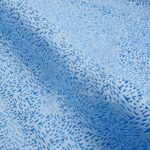
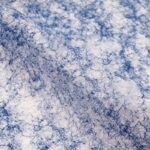
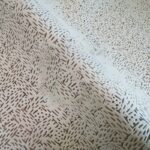
Meltblown PP wipes are made from fine polypropylene fibers bonded by heat. They are excellent for oil, grease, and solvent-based cleaning. The fiber structure creates a large surface area for capturing oil, and polypropylene resists breakdown from many industrial solvents.
Best for: heavy-duty degreasing, oil spill cleanup, machine maintenance, solvent wiping.
Watch out for: lower water absorption and moderate lint levels. Not ideal for precision surfaces or water-based spills.
2. Spunlace Nonwoven (Cellulose / Polyester Blend)
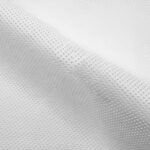
Spunlace wipes are made by entangling fibers with high-pressure water jets. A cellulose/polyester blend gives a balance of water absorption, wet strength, and low lint. These wipes hold up well when scrubbing and are suitable for general factory cleaning and more sensitive surfaces.
Best for: general maintenance, workbench cleaning, coolant spills, precision wiping, food service areas.
Watch out for: oil absorption is lower than meltblown PP. Choose the right GSM for the task.
3. Airlaid / Wood Pulp
Airlaid wipes are soft, highly absorbent, and often used for lighter-duty cleaning and drying. They feel more like paper than nonwoven fabric and are usually lower in wet strength.
Best for: light-duty drying, food service, wiping delicate surfaces, one-time use.
Watch out for: not suitable for heavy scrubbing or solvent-heavy tasks.
| Material | Oil Absorption | Water Absorption | Wet Strength | Lint Level | Typical Use |
|---|---|---|---|---|---|
| Meltblown PP | High | Low | Good | Medium to high | Degreasing, oil spills, solvent |
| Spunlace Cellulose/Polyester | Medium | High | High | Lower | General cleaning, precision wiping |
| Airlaid / Wood Pulp | Low | High | Low | Low to medium | Light drying, food service |
Common Formats and Where They Fit
The format affects how the operator uses the wipe, how much waste is created, and how easily contamination is controlled.
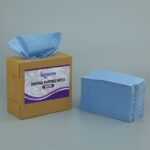
Pop-up Box
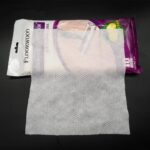
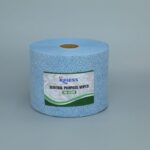
One wipe pulls the next into place. This reduces cross-contamination and makes it easy to control usage. Common for meltblown PP degreasing wipes and light-duty precision wipes.
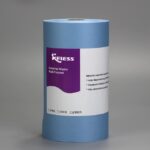
Perforated Roll / Jumbo Roll
The operator tears off the length needed. Wall-mounted dispensers save space and reduce waste. Good for general maintenance and high-volume cleaning stations.
Quarter-Fold
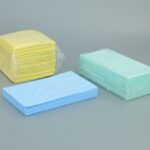
Stacked and interlocked, these are economical and easy to grab. Suitable for general cleaning where controlled dispensing is less critical.
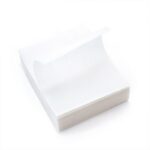
Flat Sheets
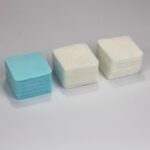
Simple dry wipes for light-duty wiping, drying, and packing. Often used with airlaid or light spunlace materials.
A Simple Selection Matrix
| Application | Recommended Material | Recommended Format | Key Property |
|---|---|---|---|
| Heavy degreasing / oil spills | Meltblown PP | Pop-up box or roll | Oil absorption, solvent resistance |
| General factory maintenance | Spunlace cellulose/polyester | Quarter-fold or roll | Wet strength, absorbency |
| Precision / electronics | Low-lint spunlace | Pop-up box or flat sheet | Low lint, soft surface |
| Food service / light drying | Airlaid / wood pulp | Flat sheet or roll | Softness, water absorption |
Why Supplier Quality Control Matters More Than the Spec Sheet
A spec sheet can be printed by anyone. Consistent quality across every batch is what separates a reliable supplier from a risky one.
For high-end nonwoven wipes, especially those used in medical and electronic applications, production must take place in a controlled environment. We use Class 100 cleanrooms for these products. Workers wear full cleanroom suits, masks, and gloves. No exposed hair is allowed. We also place adhesive dust mats under the machines to monitor linting rate while the fabric rotates during production.
Every batch goes through a double inspection process:
- Automated equipment inspection checks for holes, thickness variation, and inconsistencies.
- Manual human inspection confirms texture, edges, and overall appearance.
If a batch fails either stage, it does not leave the factory.
We also serve many Japanese clients, who are known for having some of the strictest quality standards in the world. When European and American buyers visit our factory and see Japanese orders in production, they gain immediate confidence in our quality control.
Certifications and Documentation
For B2B buyers, documentation matters. We provide:
- ISO 9001 quality management system
- SGS reports
- MSDS documentation
These documents help you verify material safety, compliance, and consistency before you commit to a bulk order.
Sample Policy: Test Before You Commit
We understand that switching suppliers carries risk. Our sample policy is designed to make testing easy:
- Small sample packs: generally free for testing.
- Large samples or full boxes: a small cost fee covers material and shipping.
- Custom testing: we try our best to meet specific test requirements.
Good suppliers are not afraid of sample testing. We want you to verify the product before you place a bulk order.
Team, Communication, and Lead Time
Who you work with matters. High staff turnover means you may have to re-explain your requirements every few months. Our sales team includes professionals with over 15 years of experience in the nonwoven industry. This low turnover reflects our stability and industry knowledge.
Our communication promise is simple: we respond within 24 hours. If you have a question, concern, or urgent issue, you can contact us at any time.
We also maintain a stable lead time of 15 to 30 days, so you can plan your inventory and fulfill your own customer orders without unnecessary stress.
[Insert YouTube Video Link Here: Keless Material Factory Tour | Inside Our Class 100 Cleanroom]
How to Run a Simple Trial
For most factories, a practical trial works better than a long debate. Choose two materials, such as a meltblown PP wipe and a spunlace cellulose/polyester wipe. Use them in the same tasks for one week. Track:
- Number of wipes used per task
- Lint left on the surface
- Wet strength after scrubbing
- Surface damage or residue
- Operator feedback
Then calculate the cost per cleaned area, not just the cost per box. This data will give you a clear answer.
Conclusion
Disposable wiping cloths are not all the same. Material, format, GSM, and supplier quality control all affect performance and total cost. Match the wipe to the cleaning task, verify the specifications with samples, and choose a supplier who can support OEM sizes, packaging, and consistent quality.
At Keless Material, with 17 years of experience, Class 100 cleanroom production, and a commitment to quality, we are ready to support your business.