



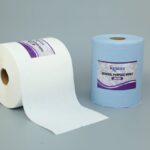
Choosing a stencil cleaning roll is not just a purchasing decision. It is a process decision. The roll contacts the underside of the stencil thousands of times per shift, and small differences in fiber structure, winding tension, or edge quality can shift defect rates in ways that only show up downstream—at AOI, at rework, or at the customer’s incoming inspection.
Most guides approach this topic from the buyer’s side: what to compare, what to ask, what to avoid. This guide comes from the other side—the factory floor. Suzhou Keless Purification Material Co., Ltd. has been producing nonwoven wiping products since 2008, operating a 10,000 m² production base in Suzhou, China, and serving customers in over 30 countries. We supply stencil cleaning rolls as both standard items and fully customized OEM/ODM products. Here is what we have learned about what actually matters.
What a stencil cleaning roll has to do
The under-stencil cleaning cycle is a three-function process. The roll must absorb flux and solvent, trap solder paste particles instead of redistributing them, and transport solvent evenly across the wipe path. If any of these functions underperforms, the symptom usually appears later as bridging, solder balling, or aperture contamination.
Two failure modes are especially common in production:
- Paste smear-back. The substrate is too open or the surface structure does not grip paste effectively. Residue transfers from the roll back into the apertures.
- Insufficient solvent wicking. The substrate is too dense. Solvent sits on the surface rather than being absorbed, and the stencil leaves the cycle damp.
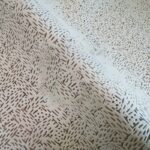
A third issue—fibre shedding—is harder to see but equally damaging. Loose fibres can lodge in apertures or sit between stencil and pad. A tape test on the stencil underside, examined under low-power magnification, is a more reliable check than a supplier’s general claim of “lint-free” construction.
Substrate types: what works for which application
https://www.keless-material.com/about
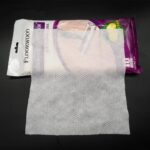
Most stencil cleaning rolls use hydroentangled nonwovens. The performance differences come from fiber blend and bonding method, not from branding.
| Substrate | Structure | Common application | Watch for |
|---|---|---|---|
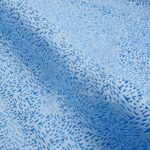
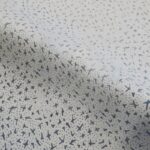
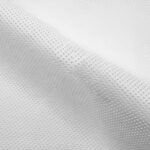
| Mesh spunlace | Apertured hydroentangled web | General paste wiping, higher paste volume | Stiffer hand, higher cost per roll |
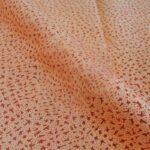
| Plain spunlace (viscose/polyester) | Flat hydroentangled web | Fine-pitch work, low-lint requirements | Smooth surface may grip paste less aggressively |
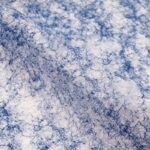
| Viscose/cellulose blends | Blended nonwoven, absorbent | Alcohol-based flux, general cleanroom use | Can swell with water-based chemistry |
| Meltblown polypropylene | Fine fibre, high surface area | Flux and oil absorption | Lower wet strength; not for saturated wiping |
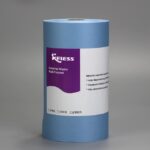
At Keless, we produce rolls across these substrate categories and can adjust fiber ratio, web weight, and surface texture to match a specific paste type and wipe frequency. Because we control fiber selection and nonwoven formation in-house, we can also develop custom substrate blends for applications where standard materials fall short.
Dimensions that must match exactly
Roll geometry is binary. It fits the printer or it does not, and unlike substrate performance, there is no partial credit. The values below need to be confirmed against the machine manual and a physical sample before production quantities are ordered.
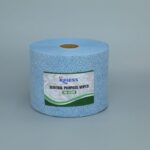
- Roll width: 266 mm, 300 mm, 350 mm, and 400 mm cover most SMT printer platforms. Match the paper path, not the stencil size.
- Core inner diameter: 25.4 mm, 38 mm, and 76 mm are the common hub sizes. An oversized core will slip under torque and index unevenly.
- Outer diameter and roll length: Longer rolls reduce changeover frequency, but only if the supply cover and take-up spool accept the diameter.
- Perforation pitch: Printers that index on perforation lines need the pitch and tear strength to match, or the roll breaks at the wrong point.
- Winding direction and tension: Surface-wound and centre-wound rolls pay out differently. A spongy or oval roll tracks sideways and jams.
- Edge trim: Frayed or crushed edges shed fibres from the first metre onward.
Width is the forgiving dimension—roughly 1 mm of tolerance is workable in most printers. Core diameter and winding tension are not forgiving. This is where factory-direct sourcing makes a practical difference: when we control the winding process, we can hold tension to a tighter tolerance than a distributor who purchases finished rolls from multiple sources.
Solvent and flux compatibility
Stencil cleaning rolls are normally supplied dry and wetted by the machine. This is deliberate—it lets the process owner control solvent volume and avoids the shelf-life issues of pre-saturated paper.
Match the substrate to the chemistry:
- IPA and alcohol-based fluxes are the common case. Viscose and viscose-polyester blends handle them well.
- Water-based and semi-aqueous pastes put different demands on the fibre. Water swells cellulose and can soften a roll enough to distort it under the wipe bar.
- Aggressive solvents may attack binder chemistry or leach dye from coloured substrates.
If paste chemistry changes, retest the roll. A substrate that performed on one flux can fail on another, and the symptom is usually a smear that appears halfway through a run rather than on the first board.
Why factory-direct sourcing changes the equation
Most stencil cleaning roll buyers purchase through distributors. That model works when the requirement is a standard size and a standard substrate. It becomes less effective when the roll needs to match a specific paste chemistry, a non-standard core diameter, or a tight winding tolerance.
Keless operates differently. We are not a trading company or a repackager. Our Suzhou facility handles fiber selection, nonwoven formation, converting, and packaging under one roof, with ISO 9001 quality management across every stage. For stencil cleaning roll customers, this means:
- Substrate customization. We can adjust fiber blend, web weight, thickness, and surface texture to match your paste type and wipe frequency—not just select from a catalog.
- Exact geometry. Core material and diameter, roll width, outer diameter, roll length, and perforation pitch are produced to your specification, not adapted from a nearest-fit standard size.
- Winding control. Surface-wound or centre-wound, with tension verified on the production line. No oval winds, no crushed cores.
- Consistent edge quality. Clean trims that do not shed fibres from the first metre.
- OEM/ODM support. Private label, custom packaging, and documentation for your customers.
This is the difference between buying a roll and specifying a roll.
What to send with a custom roll enquiry
A supplier cannot quote accurately from a keyword alone. These seven items cover most of what a factory needs to produce a first article:
- Printer make, model, and wiping module or hub type.
- Roll width, core inner diameter, outer diameter, roll length, and perforation pitch.
- Paste type (no-clean, water-soluble, lead-free) and the smallest aperture on the stencil.
- Solvent used and whether it is sprayed, rolled on, or applied manually.
- Cleanroom class and any lint or ionic contamination limits.
- Packaging format: individual wrap, rolls per carton, labelling, and pallet arrangement.
- Sample quantity and the first-article report you expect.
Keless can review these details and recommend a substrate and sample plan. Visit keless-material.com to start a first-article request or explore our full range of nonwoven wiping products.
Qualifying a roll before committing to production
Paper trials are cheap compared with line trials, and line trials are cheap compared with a scrap batch. Three stages are usually enough to separate a workable roll from a risky one:
- Baseline the current roll. Record defects per million joints, wipe cycle interval, changeover time per roll, and the paste used. Without a baseline, any new roll looks acceptable.
- Run the candidate on a single printer for two weeks at normal production load. Log bridging, solder balling, and AOI false calls. Note whether operators had to re-thread or re-seat the roll.
- Inspect at the end of the trial. Check the stencil underside with a tape test, review the residue pattern on the paper, and confirm the roll core and edges are still round and clean after a full run.
Rolls that pass all three stages rarely fail later.
Frequently asked questions
What is a custom SMT stencil cleaning roll?
It is an under-stencil wipe roll produced to match a specific printer, roll width, core size, winding direction, substrate blend, and paste chemistry. Unlike a standard roll, every dimensional and material parameter is specified by the buyer.
How does factory-direct sourcing differ from buying through a distributor?
A factory controls fiber selection, nonwoven formation, winding tension, and edge trimming. A distributor selects from available stock. For standard sizes, both can work. For custom substrates, non-standard geometry, or tight winding tolerance, factory-direct gives more control and fewer surprises.
What substrate is best for fine-pitch SMT work?
Plain spunlace viscose/polyester is common for fine-pitch applications because of its low-lint construction. However, the right choice depends on paste type, solvent, and wipe frequency. A substrate that performs well in one process may not in another.
Can I use the same roll for water-based and alcohol-based fluxes?
Not always. Water-based chemistries can swell cellulose fibres and soften the roll. If paste or solvent changes, retest the roll under production conditions.
What is the minimum order for a custom stencil cleaning roll?
This depends on the degree of customization. Substrate adjustments and standard geometry changes typically require lower minimums than entirely new material development. Contact Keless with your specification for a quote.
Does Keless supply stencil cleaning rolls for MPM and DEK printers?
Yes. Keless produces stencil cleaning rolls compatible with MPM, DEK, and other common SMT printer platforms, in both standard and custom configurations. Contact us with your printer model and roll dimensions for a recommendation.
The bottom line
Roll price is the smallest number in the equation. What you are buying with a custom specification is repeatability: consistent width, consistent winding tension, and a substrate that behaves the same on roll one as on roll forty. That consistency is what keeps the cleaning cycle out of the defect Pareto.
At Suzhou Keless, we have spent 17 years building the production infrastructure to deliver that consistency—from fiber selection to finished roll, under one roof, with full-process quality control. If you are evaluating stencil cleaning roll suppliers, we welcome the opportunity to produce a first article against your specification.
Contact Keless →https://www.keless-material.com/contact/
Our website:https://www.keless-material.com/